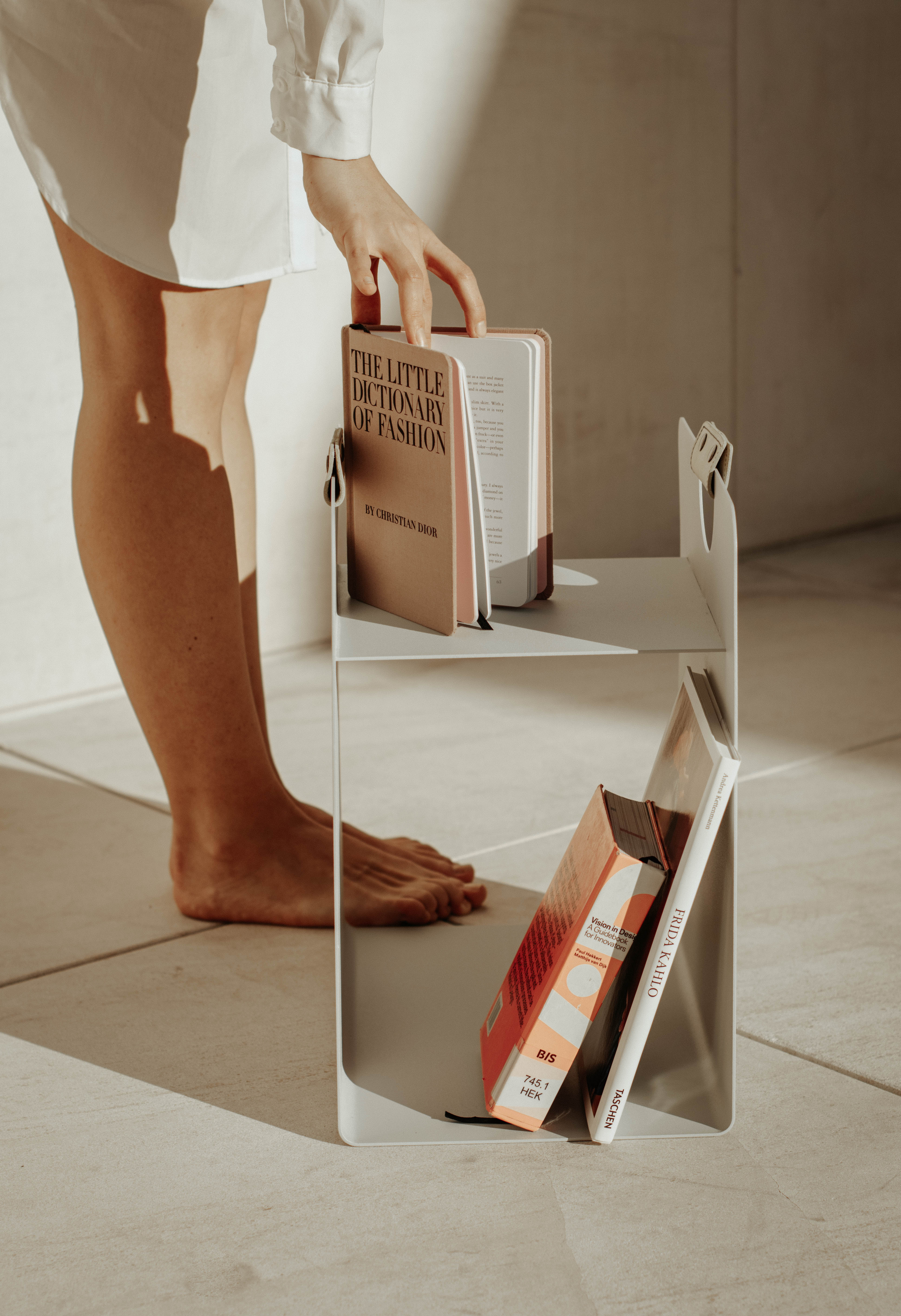
Books outgrow every shelf they're given. The problem has two halves: building enough storage, and organising it so you can find what you want in under ten seconds. The thirty ideas below cover both — sequenced roughly from highest structural impact to most creative, with real notes on cost, materials, and difficulty so you can pick what fits your situation.
Building more shelf
1. IKEA Billy hack. Add cornice moulding at the top, a base plinth from 2×4 lumber, and a coat of deep paint. The result reads as built-in cabinetry at one-tenth the cost. The 11-inch-deep Billy accommodates most paperbacks; the deeper Hemnes fits large-format books. Cost: $80–160 in units plus $40–80 in trim and paint. Time: a weekend.
2. Floor-to-ceiling floating shelves with steel brackets. A wall of floating shelves at even spacing holds more books per square foot than almost any other solution and looks clean doing it. Use 3/4-inch birch plywood for shelves, 12-inch open steel brackets, and 3-inch screws into studs. Safety note: a single shelf loaded with books can carry 30–50 lbs of sustained load — always anchor brackets into wall studs, not into drywall alone. Use a stud finder before drilling; drywall anchors are not adequate for book loads — structural and CPSC safety guidance consistently advises stud anchoring for any shelf carrying sustained weight. Cost: $12–18 per shelf in materials.
3. Alcove bookshelves around a fireplace or doorway. Built-in alcove shelves beside a chimney breast use dead wall space with no floor footprint. Adjustable shelf pins on side panels let you vary heights as your collection changes. The painted casing that trims the edge requires a nail gun and wood filler. Cost: $150–400 depending on depth and height. Time: a weekend for two alcoves.
4. Under-stairs library. The triangular void under a straight staircase is the single largest untapped storage space in most two-storey homes. Frame it out with fixed shelves in stacked triangles that follow the stair pitch. Access the deepest sections with rolling library steps. Cost: $200–500 in lumber and hardware. Time: 2–3 weekends.
5. Window-seat bookcases flanking a window. Floor-to-seat-height cabinets on either side of a window, topped with a padded bench seat, give you seating and storage in one piece. IKEA Besta or Sektion base cabinets make this approachable without a full woodworking build. Cost: $300–600 for the full setup.
6. Invisible wall shelves. An L-shaped bracket slides invisibly inside a hollowed-out dummy book at each end; the books between appear to float. Limit: one row per shelf, under 10 lbs per bracket. Best as a reading-corner accent rather than primary storage. Cost: $15–25 per bracket. Time: 30 minutes.
7. Pipe-and-board shelves. Black steel pipe flanges assembled with a drill mount directly to the wall and carry 3/4-inch boards cut to length. Industrial aesthetic; works in modern and loft-style rooms. Safety note: pipe flanges must anchor into studs — the pipe-and-board combination concentrates weight on a small number of fastpoints. Cost: $30–50 per shelf. Time: 1 hour per shelf.
8. Repurposed ladder. An old wooden ladder, painted or sealed, leaned against a wall holds books on the rungs. No wall mounting required — books weight the base. Best for paperbacks and small hardbacks in a bedroom or reading nook. Cost: $0 if you have one; $20–40 salvaged.
9. Stacked wooden crates bolted together. Wooden crates bolted through their walls in a stacked grid make a modular, rearrangeable unit. Bolt adjacent crates at corners to prevent rocking. For stacks taller than three crates, secure to the wall with an anti-tip strap. Cost: $10–20 per crate.
10. Over-the-door shelves in a kids' room. Command-style over-the-door hooks with a thin wooden shelf resting on them produce a child-height book display at almost no cost. Forward-facing covers — kids choose books by cover, not spine. Cost: $15–30.
Anchoring bookshelves safely
Before any shelf build: locate studs with a stud finder. For shelves carrying books — anything above 20 lbs per shelf — every bracket must hit a stud. Toggle bolts and hollow-wall anchors are for light decorative shelves only. Freestanding bookcases should also be secured to the wall with an anti-tip strap (L-bracket or dedicated furniture strap). CPSC data on furniture tip-overs consistently shows that unsecured tall furniture is a leading cause of preventable injury, particularly among children under five. Anti-tip straps cost $5–10 and install in 15 minutes.
Organising systems
11. By colour. Beautiful; terrible for finding a specific title unless you have an exceptional memory for cover colours. Use only for display shelves where books are objects, not references. Mix in a few non-book items to prevent the arrangement looking like a showroom.
12. By genre or subject. The most practical system for a library of 100–400 books. Fiction in one section, non-fiction divided into rough topics. Within each genre, author alphabetical. Two-step lookup: genre, then alphabet.
13. By author alphabetical within genre. Library-grade findability. Requires section dividers or labelled shelf ends — index cards in small frames cost almost nothing and save significant searching time.
14. By height. Clean visual rhythm; sacrifices findability almost entirely. Useful on a single display shelf; not viable as the organising principle for a whole library. Compromise: shelve by height within genre.
15. Chronological by publication. Useful for specific collections: a full run of one author, a history section where books reference each other in order, a collection of classics organised by era.
16. Read / unread separation. One side for books you've read, one for books waiting. Most people discover, when they divide like this, that the unread queue is far larger than estimated — which is productive information, not a source of shame.
17. "To read this year" shelf. Deliberately small — 20 to 30 titles — kept prominently in daily view. The constraint forces curation. Remove books as you finish them; add one when a slot opens. A curated shortlist, not an aspirational stack.
Storage tricks
18. Mix horizontal and vertical stacks. Occasional horizontal stacks — three or four books laid flat with a small object on top — break the all-vertical rhythm in a way the eye registers as intentional. This is the "styled bookshelf" look; the horizontal stacks are the entire trick.
19. Bookends that double as art. Cast metal or stone bookends over 1 lb each keep vertical books from toppling and add visual interest at shelf ends. Decorative-only bookends that tip with the books are useless.
20. Double-stack paperbacks on deep shelves. A 12-inch-deep shelf holds two rows of paperbacks front-to-back. A 2-inch-tall riser in the back row raises it so both rows' spines are visible simultaneously. Cost: near zero.
21. Seasonal rotation bins. Not every book belongs on the shelf year-round. Cookbooks rotate seasonally; travel books come out for trip planning. A single bin per thematic grouping, rotated deliberately, keeps the active shelf lean.
22. Donate ruthlessly. The threshold that works: if you haven't opened it in five years and wouldn't lend it to a close friend, it goes. Every book you remove frees shelf space and makes the remaining books more visible.
Creative spots
23. Staircase-landing bookcase. The short wall at a landing turn holds a slim bookcase or a run of wall-mounted shelves. The landing location makes books visible twice daily without any special effort.
24. Bathroom bookshelf. Humidity from a shower is manageable with ventilation. A small shelf of paperbacks in a bathroom with an exhaust fan running during and 20 minutes after each shower holds up fine. Avoid hardbacks with paper-over-board covers — they absorb moisture at the spine.
25. Behind-the-couch console with low shelves. A low console table (30 inches high) behind the sofa doubles as a surface and a two-shelf bookcase. Good for coffee table books, current reads, and magazines without blocking sightlines.
26. Corner unit in a bedroom. Corner shelving uses the diagonal dead space most bedrooms have in at least one corner. A simple triangular shelf unit — plywood cut at 45-degree angles — fits books, plants, and bedside items.
27. Rain-gutter book bins in a kids' room. Short sections of white PVC rain gutter (12–16 inches each) mounted horizontally with standard end caps make forward-facing book bins that show cover art. Four or five mounted at child height hold 4–6 picture books each at about $20 in materials. Mount into studs.
28. Closet-to-mini-library conversion. A standard bedroom closet with the doors removed and shelves installed floor-to-ceiling at 10-inch spacing holds 200–300 books in 9–11 square feet. Frame around the opening with casing trim, paint the interior a contrasting colour, and add a reading chair facing the opening.
29. Under the bed — shallow storage bins for overflow paperbacks. Low, flat bins on wheels under the bed hold paperbacks for off-season reading rotation. Label each bin by category. One 36-inch-wide bin under a queen bed holds roughly 50 paperbacks.
30. Built-in headboard with book cubbies. A headboard built from plywood with open cubby compartments on either side — roughly 10 inches wide by 8 inches tall each — holds 15–20 books per side at arm's reach. Mount the headboard to the wall into studs — it will experience repeated pushing forces and needs to be fixed rather than free-standing.
The one principle that ties all thirty together
The best bookcase is the one you walk past daily. Placement in the path of your natural movement — the living room, the kitchen pass-through, the top of the stairs — means you interact with your books without deciding to. A library behind a closed door is a storage unit. A library in the living room becomes a habit.
For practical organisation methods that work across your whole home, the 41 organization hacks that work with what you already own covers the broader principle. The creative home organizing ideas that prioritise daily use shows how the same logic applies room by room. For the construction skills behind the shelf builds, see essential DIY tricks every homeowner should have in their toolkit.



Comments (0)