No food "burns calories" in a magical sense — the thermic effect of food (TEF) accounts for only about 10% of total daily energy expenditure, and even for protein, the highest-TEF macronutrient, digestion consumes far less energy than the food itself provides. What certain foods do accomplish is more nuanced: they cost the body more energy to process, they slow digestion so hunger stays quiet longer, and they create the hormonal conditions — lower ghrelin, higher GLP-1 and GIP — that make sustaining a modest calorie deficit feel less like willpower and more like habit. None of them overrides a calorie surplus; all of them make a reasonable deficit noticeably easier to hold.
A sustainable pace of fat loss — 0.5 to 1 lb per week — is the range where muscle is preserved, hunger is manageable, and results stick. These foods support that pace; they are not a shortcut past it.
1. Lean Protein: Chicken, Fish, and Lean Beef
Protein is the most powerful dietary lever for fat loss. Higher intake — roughly 1.2 to 1.6 g per kilogram of bodyweight per day — raises satiety hormones (GIP and GLP-1), suppresses ghrelin, and carries the highest thermic effect of any macronutrient at 20–30% of calories consumed. A 2024 systematic review and meta-analysis on protein and body composition confirmed that a minimum of 1.3 g/kg/day is recommended for overweight adults. A 200-calorie serving of chicken breast costs roughly 40–60 calories just to digest — compared with 5–10 calories for the same energy from carbohydrate. Aim for a palm-sized portion of lean protein (85–100 g cooked) at every main meal: chicken breast, white fish, canned tuna, 95%-lean ground beef, or fatty fish like salmon for added omega-3 benefit. Distribute protein intake evenly across meals rather than backloading it at dinner.
2. Eggs
At roughly 70–80 kcal per large egg, with 6 g of complete protein, eggs deliver satiety that far outperforms their calorie cost. Multiple trials show that an egg-based breakfast reduces calorie intake at both lunch and dinner compared to a carbohydrate-matched breakfast — the mechanism is slower gastric emptying driven by protein and fat combined. Two or three eggs at breakfast, scrambled with spinach or hard-boiled for on-the-go use, sets a protein floor that keeps ghrelin low well into the afternoon. If cholesterol is a concern, consult your doctor; for most people, moderate egg consumption fits comfortably within a heart-healthy diet.
3. Green Tea
Green tea's weight-loss reputation is real but overstated. The catechin EGCG produces a measurable metabolic effect, but a 2024 meta-analysis found only a small, clinically minimal additive effect from green tea combined with exercise — well below the 2.5 kg threshold considered clinically meaningful (Journal of the International Society of Sports Nutrition, 2024). Where green tea genuinely earns its place is as a zero-calorie replacement for sweetened drinks. Three cups replace roughly 300–450 calories of juice, sweetened coffees, or sodas — and that substitution is where the weight-loss benefit actually comes from. Drink it unsweetened.
4. Chilli Peppers
Capsaicin produces a real but modest thermogenic effect — a temporary 4–5% increase in metabolic rate and a mild reduction in appetite. The calorie burn from a serving of chilli is measured in single digits. The appetite suppression is more meaningful in practice: a meal spiced with chilli, cayenne, or sriracha is more satisfying than a bland equivalent, which matters on days when the deficit feels hard. Use chilli as a flavour tool that adds satiety at almost zero calorie cost.
5. Greek Yogurt
Plain full-fat or 2% Greek yogurt delivers 17–20 g of protein at 130–150 calories per 170 g serving, plus live probiotic cultures. The protein drives TEF and satiety; the thickness makes it satisfying in a way lower-protein yogurts do not match. Choose plain Greek yogurt and sweeten with berries rather than buying pre-flavoured varieties, which frequently contain 15–25 g of added sugar — undermining the satiety benefit. It works as a breakfast protein base, a post-workout snack, or a high-protein substitute for sour cream.
6. Oats
Oats contain beta-glucan, a soluble fibre that forms a viscous gel in the small intestine, slowing gastric emptying, blunting the post-meal glucose rise, and extending satiety significantly. A 40 g serving of rolled oats provides around 4 g of beta-glucan — close to the 4–6 g associated with meaningful satiety effects — plus 5 g of protein and 150 calories. Cook with water and add protein (nut butter or plain protein powder) to raise the TEF of the meal. Avoid instant flavoured varieties, which regularly contain 10–15 g of added sugar.
7. Leafy Greens
Spinach, kale, rocket, Swiss chard, romaine — at 20–25 kcal per 100 g, leafy greens are one of the few food categories where volume and calorie density are dramatically mismatched in your favour. A 200 g plate of spinach delivers roughly 46 calories, 5 g of fibre, and meaningful iron, folate, and vitamin K. Add leafy greens to every meal where feasible: as a base for grain bowls, blended into smoothies, folded into scrambled eggs, or packed into soup. A large salad before a restaurant meal is one of the most evidence-consistent strategies for reducing total calorie consumption at that sitting.
8. Berries
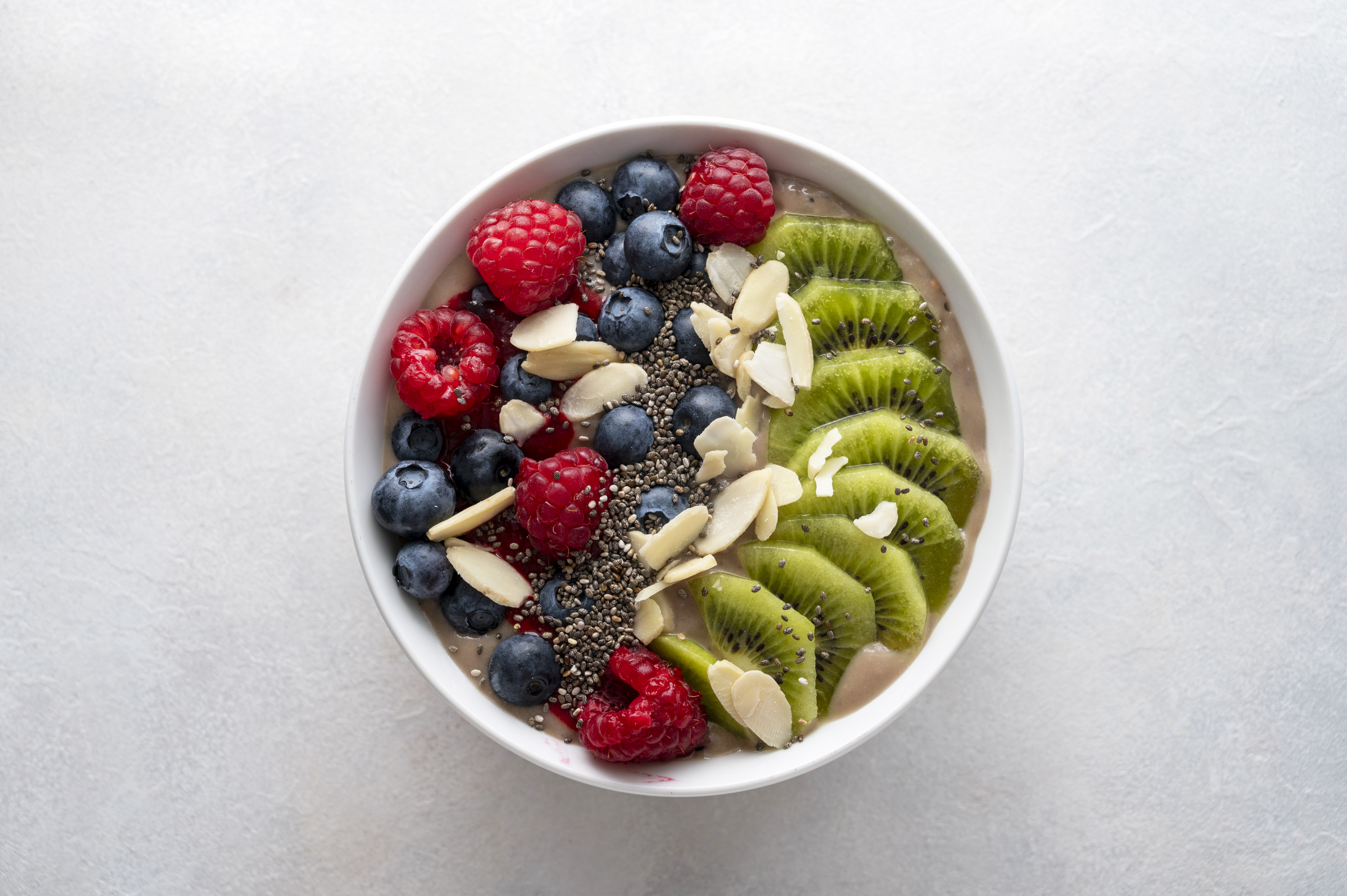
Blueberries, raspberries, strawberries, and blackberries carry a low glycaemic load — raspberries register a GI below 25 — combined with 4–8 g of fibre per cup and high antioxidant density. A full cup of raspberries delivers 65 calories and 8 g of fibre: a satiety-to-calorie ratio that very few foods match. Use berries as the primary sweetener in Greek yogurt, oatmeal, and smoothies rather than adding honey or sugar. Frozen berries are nutritionally equivalent to fresh and significantly cheaper year-round.
9. Almonds
A 30 g portion (roughly 23 nuts) contains 164 calories, 6 g of protein, 3.5 g of fibre, and 14 g of mostly monounsaturated fat. Multiple studies find that a pre-meal or mid-morning almond portion reduces subsequent meal intake. Almonds also have a lower bioavailable calorie count than their label suggests — rigid cell walls mean roughly 10–15% of the fat is not absorbed. Pre-portion before eating; four handfuls become a 650-calorie meal.
10. Water: Underrated and Free
Drinking 500 ml (about two cups) of water 20–30 minutes before a meal reduces intake by 75–90 kcal on average through gastric stretch, mild ghrelin suppression, and displacement of calorie-containing drinks. Over a week, that is 500–600 kcal saved with no hunger cost. Thirst is also frequently confused with mild hunger, particularly in the afternoon — a full glass of water when the urge to snack arises is a legitimate first response. Aim for pale yellow urine as a practical hydration target rather than a fixed number of litres.
What Undermines Every Gain on This List
Ultra-processed foods undermine satiety at a pace that overwhelms the benefit of the foods above. A 2025 Lancet series directly links rising UPF consumption to obesity, type 2 diabetes, and cardiovascular disease through hyper-palatability engineering and reduced chewing frequency — a 2024 randomised crossover RCT at the University of Tokyo Hospital (Diabetes, Obesity and Metabolism, Wiley) confirmed that UPF consumers eat faster and consume more calories even when caloric density is matched to whole-food alternatives. Cutting UPFs is the single most reliable way to reduce involuntary calorie overconsumption.
Added sugars are metabolically distinct from naturally occurring sugars. Fructose from high-fructose corn syrup and table sugar directly stimulates de novo lipogenesis, raises triglycerides, and promotes visceral fat in ways that glucose does not, as established by a 2024 literature review on dietary fructose. The 2025–2030 US Dietary Guidelines are unambiguous: no amount of added sugars is recommended (Harvard T.H. Chan/US Dietary Guidelines, 2026). Flavoured yogurts, granola bars, protein bars, and bottled teas are common hidden vectors — each can carry 20–30 g of added sugar while wearing a health halo.
Sleep deprivation is as corrosive as poor food choices. Sleep-restricted adults (fewer than seven hours per night) consume approximately 328 additional calories per day, predominantly from snacks, driven by elevated ghrelin and reduced leptin (Diabetes/Metabolism Research and Reviews, 2024). Seven to nine hours of sleep is a metabolic requirement, not optional recovery. Consistently under seven hours while struggling to maintain a deficit? Sleep extension may do more for your weight than any dietary change.
The Real Hierarchy: Diet Quality Matters More Than Exercise
A 2025 study of over 4,200 adults using doubly-labeled water found that diet quality, not physical activity level, is the primary driver of weight gain and obesity. Exercise is valuable for health and muscle preservation but does not fully compensate for excess calorie intake. For a deeper look, Diet or Exercise: Which Matters More for Weight Loss? works through the evidence in detail.
Combining These Foods Into a Daily Pattern
- Breakfast: Two or three scrambled eggs with spinach (items 2, 7), rolled oats topped with frozen blueberries (items 6, 8), and unsweetened green tea (item 3).
- Mid-morning: 30 g almonds (item 9) with a glass of water (item 10). Drink the water first; wait five minutes.
- Lunch: Large salad base of rocket or romaine (item 7) with a palm-sized portion of grilled chicken or canned tuna (item 1). Olive oil and lemon dressing — not a bottled dressing with added sugar.
- Afternoon snack: 170 g plain Greek yogurt (item 5) with a handful of raspberries (item 8).
- Dinner: Palm-sized portion of salmon or lean beef (item 1), chilli-spiced vegetable stir-fry (items 4, 7), and a side of oats or legumes for fibre.
- Pre-meal habit: 500 ml of water 20–30 minutes before lunch and dinner (item 10).
Protein anchors every meal; fibre extends the fullness window; volume from greens and water reduces the appetite that would otherwise push portion sizes up. The result is a pattern where hitting a 400–500 kcal daily deficit requires less active resistance — which is precisely what makes it sustainable over the months required for meaningful fat loss. For a broader catalogue of foods that operate through the same mechanisms, 36 Foods That Support Fat Loss is worth reading alongside this list.
Frequently asked questions
Do any foods really burn more calories than others?
How does protein suppress hunger?
Does eating spicy food help with weight loss?
Is oatmeal good for weight loss?
Sources
- The effects of sleep disruption on metabolism, hunger, and satiety, and the influence of psychosocial stress and exercise: A narrative review — Diabetes/Metabolism Research and Reviews (2024)
- Comparison of concurrent, resistance, or aerobic training on body fat loss: a systematic review and meta-analysis — Journal of the International Society of Sports Nutrition (2025)
- Ultra-processed foods cause weight gain and increased energy intake associated with reduced chewing frequency: A randomized, open-label, crossover study — Diabetes (2024)
- Effect of resistance exercise on body composition, muscle strength and cardiometabolic health during dietary weight loss in people living with overweight or obesity: a systematic review and meta-analysis — BMJ Open Sport & Exercise Medicine (2025)
- Dietary Fructose: A Literature Review of Current Evidence and Implications on Metabolic Health — PubMed Central peer-reviewed literature review (2024)


Comments (0)